Non-Porous Surface
A smooth metal prep surface does not absorb liquids the way porous materials can. That can make routine washing and odor control simpler.
If your current board is deeply grooved, stained, holding onto odors, or simply more work than it should be, Katori offers a low-maintenance titanium alternative designed for everyday chopping, slicing, and prep.

The question isn’t whether you need a board. It’s whether the one you use every day still makes sense after repeated cutting, washing, staining, and wear.
The USDA advises replacing cutting boards once they become excessively worn or develop hard-to-clean grooves. It also notes that non-porous cutting surfaces are easier to clean than wood.
When a board becomes heavily scarred, food residue can be harder to remove. That is a maintenance problem before it becomes a shopping problem.
Garlic, onion, meat juices, sauces, and daily prep can leave some materials looking and smelling older than they are.
Glass and stone are easy to wipe down, but many cooks dislike how hard they feel under a knife. Katori is positioned as an alternative for people who want metal without choosing glass or stone.
If you meal-prep, cook for a family, or use your board several times a day, easy cleanup can matter more than decorative appeal.
Whole fish, weeknight vegetables, meal prep, and everyday slicing put a board through repeated cutting and washing. Katori is positioned for cooks who want a sleek, non-plastic titanium surface without the upkeep routine of a traditional wood board.
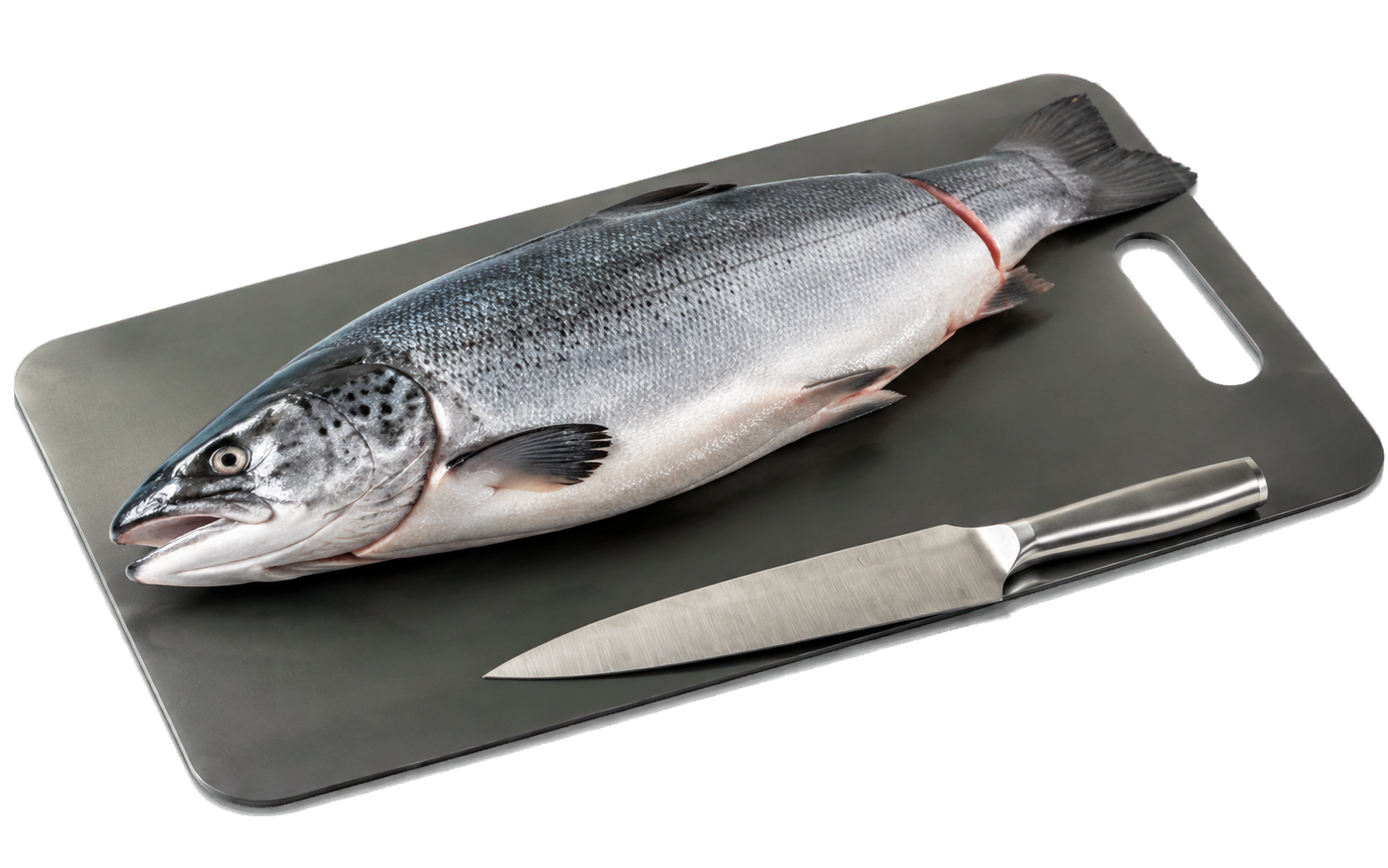
The seller currently positions Katori as a pure titanium, double-sided cutting board with a non-porous, odor-resistant, stain-resistant surface and a knife-friendly design. Those are the features worth evaluating—not hype.
A smooth metal prep surface does not absorb liquids the way porous materials can. That can make routine washing and odor control simpler.
Katori is marketed as knife-friendly and as an alternative to very hard cutting surfaces such as glass or stone. Blade wear still depends on your knife and cutting habits.
Two usable sides give you more flexibility during prep. For food safety, clean the board between foods and keep raw proteins separate from ready-to-eat foods.
No oiling routine and no porous grain to maintain. For buyers who value convenience, that simplicity is a major part of the appeal.
A strong sales page should also tell you when a product is not the right fit. Here’s the practical split.
There is no universal “perfect” board. The better choice depends on cleanup, maintenance, feel, durability, and budget.
| Material | Everyday Strength | Typical Tradeoff | Best For |
|---|---|---|---|
| Titanium / Katori | Non-porous, low-maintenance, odor/stain resistance | Premium feel and usually a higher upfront cost than basic plastic | Frequent cooks prioritizing cleanup and durability |
| Wood / Bamboo | Traditional feel; often comfortable under a knife | More material-specific care; some boards need drying/oiling | Cooks who value feel, appearance, and traditional prep |
| Plastic | Affordable, light, widely available | Can develop visible knife grooves and wear over time | Budget-conscious households and color-coded prep |
| Glass / Stone | Non-porous and easy to wipe clean | Very hard surface can be less comfortable for knife edges | Serving, presentation, or buyers who prioritize a hard wipe-clean surface |
Material behavior varies by product construction, thickness, finish, knife type, and use. Follow each manufacturer’s care instructions.
No cutting board should be marketed as a substitute for washing, sanitizing when appropriate, or separating raw animal foods from ready-to-eat foods.
Check Katori Price & AvailabilityU.S. food-safety guidance recommends washing cutting boards with hot, soapy water after use and keeping raw meat, poultry, and seafood separate from foods that will not be cooked.
About the “antibacterial” claim: the Katori seller uses antibacterial language, but you should not treat the board as self-sanitizing. Clean it after every food-prep session.
A few details worth knowing before clicking through to the seller.
The current seller page markets Katori as a pure titanium cutting board. This buying guide has not independently laboratory-tested the material composition, so confirm any product specification that matters to you on the seller’s current checkout/product page.
No cutting board should be treated as a substitute for safe handling. The seller markets Katori as antibacterial and non-porous, but USDA guidance still calls for washing cutting boards after use and separating raw proteins from ready-to-eat foods.
No. Katori is marketed as knife-friendly, especially compared with very hard surfaces such as glass or stone, but all knives dull with use. Blade steel, cutting technique, pressure, and maintenance all affect edge retention.
Katori is a non-plastic cutting surface, so it is an option for shoppers who prefer not to cut directly on plastic. That does not mean a cutting board can remove or eliminate microplastics from your overall food environment.
The current Katori seller page advertises a 30-day money-back guarantee. Guarantee rules, eligibility, return shipping, and other terms can change, so review the seller’s live terms before ordering.
It is most compelling for frequent home cooks, meal-preppers, families, and buyers who want a durable, low-maintenance, non-plastic prep surface and are willing to pay more than they would for a basic plastic board.
You are not buying a miracle kitchen gadget. You are buying a surface you may use every single day. If easier cleanup, lower maintenance, a non-plastic build, and a modern titanium design match what you want, check the seller’s current offer and decide from the live price.
View the Current Katori Offer